
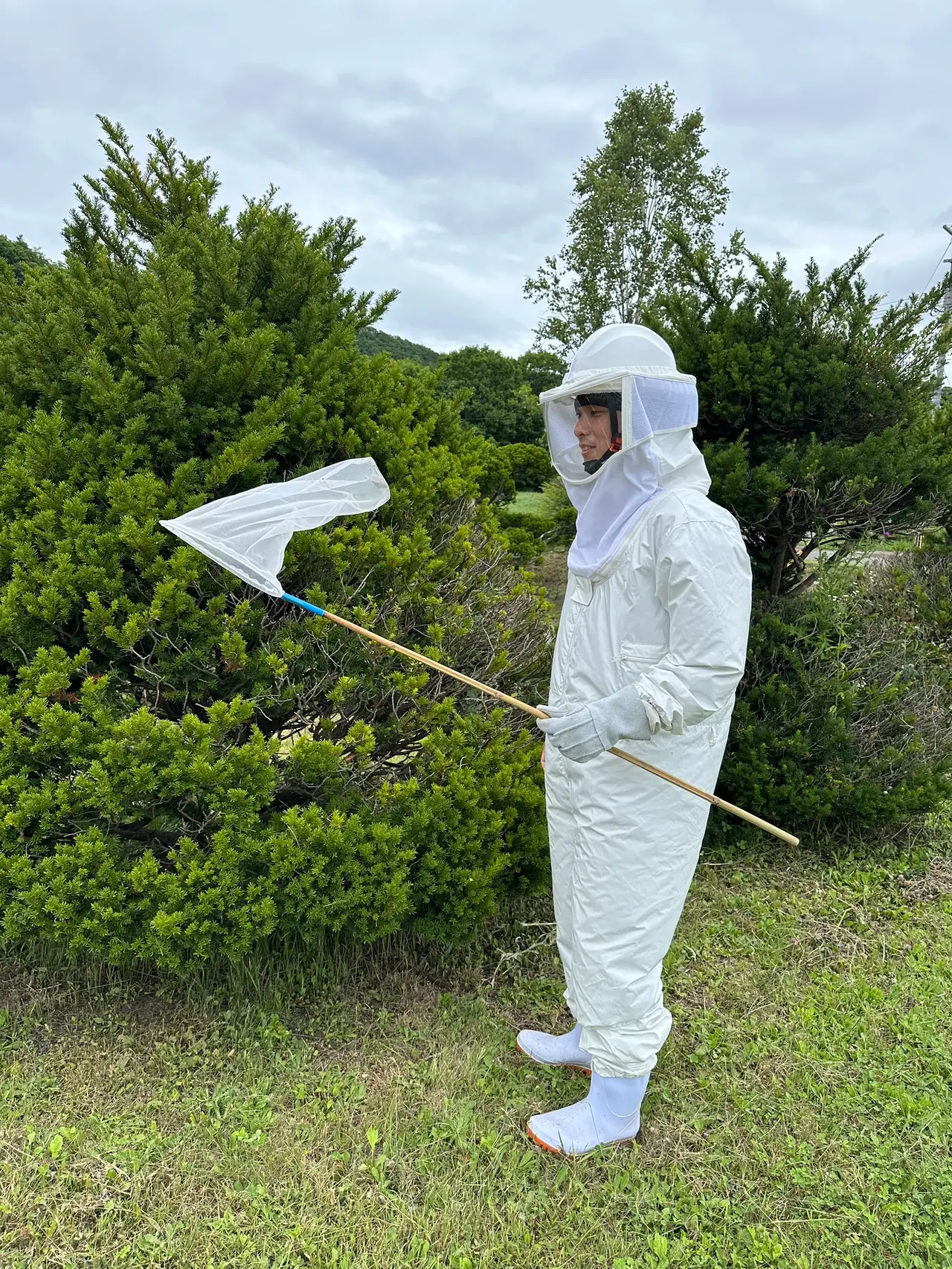
Wasp & hornet nest removal | Hokkaido (Iburi, Shiribeshi / Niseko, Sapporo, Hidaka, the south)
Wasp & Hornet Nest Removal in Hokkaido
Under the eaves, in the shed, in the attic, in a garden tree. We remove hornet, paper-wasp and honey-bee nests around your home, in protective suits and with professional insecticide.
If you find a nest, keep away. Take a photo from a distance and send it to us on LINE or by email. We quote from the photo.
- Price
- From ¥12,000 per nest (returning-wasp treatment and insecticide included)
- Hours
- Open every day, 8:00–19:00 (emergencies by arrangement)
- Base
- Nakatoya, Sobetsu, on Lake Toya. Same-day visits possible in Sobetsu, Toyako and Toyoura

Quotes are free. English is fine. Prefer email? bassai.no.kaneko@gmail.com
If you find a nest
Wasps react to anything approaching the nest and to sudden movement. Until we arrive, please follow these points.
Please do
- Move away quietly. Don't run; back off slowly
- From a distance, take a photo that shows where the nest is and how big it is (zoom is fine)
- Close windows and screens, and bring children and pets indoors
- Stop any work or mowing near the nest and tell everyone in the house where it is
Please don't
- Spray it with insecticide or water. Agitated wasps may attack
- Poke it with a stick or knock it down
- Shout or wave your arms near the nest. They react to vibration and sudden movement
- Approach in dark clothing or wearing perfume. They react to dark colours and strong scents
- Try to remove it yourself at night. Even in the dark, wasps fly towards light
If you are stung
- Get away from the spot at once. Wasps call others, so staying put can mean more stings
- Wash the sting under running water, squeeze out the venom and cool it. Don't suck it out with your mouth
- If you have trouble breathing, hives, dizziness, nausea or other whole-body symptoms, or you were stung many times, call 119 (ambulance) without hesitation. Take particular care if you have been stung before
Even if symptoms are mild, see a doctor if the swelling or pain continues. In Japan, 119 is the number for an ambulance anywhere in the country.
Prices, and what changes them
Prices are per nest and include spraying against returning wasps, the insecticide itself and liability insurance. If anything extra is needed, we tell you before we start.
With Bassai no Kaneko
¥12,000+
Per nest. Includes spraying against returning wasps and the insecticide used.
TYPICAL MARKET RATES
- Hornets¥20,000–50,000
- Paper wasps¥10,000–30,000
WHAT'S INCLUDED
- Removal work on site
- Taking down and disposing of the nest
- Returning-wasp treatment (spraying)
- Insecticide
- Liability insurance cover
The price depends on the size of the nest, where it is (shed, eaves, attic, garden tree) and whether work at height is needed. If extra work is required we quote it beforehand: no surprise charges on the day.
Where nests are usually found
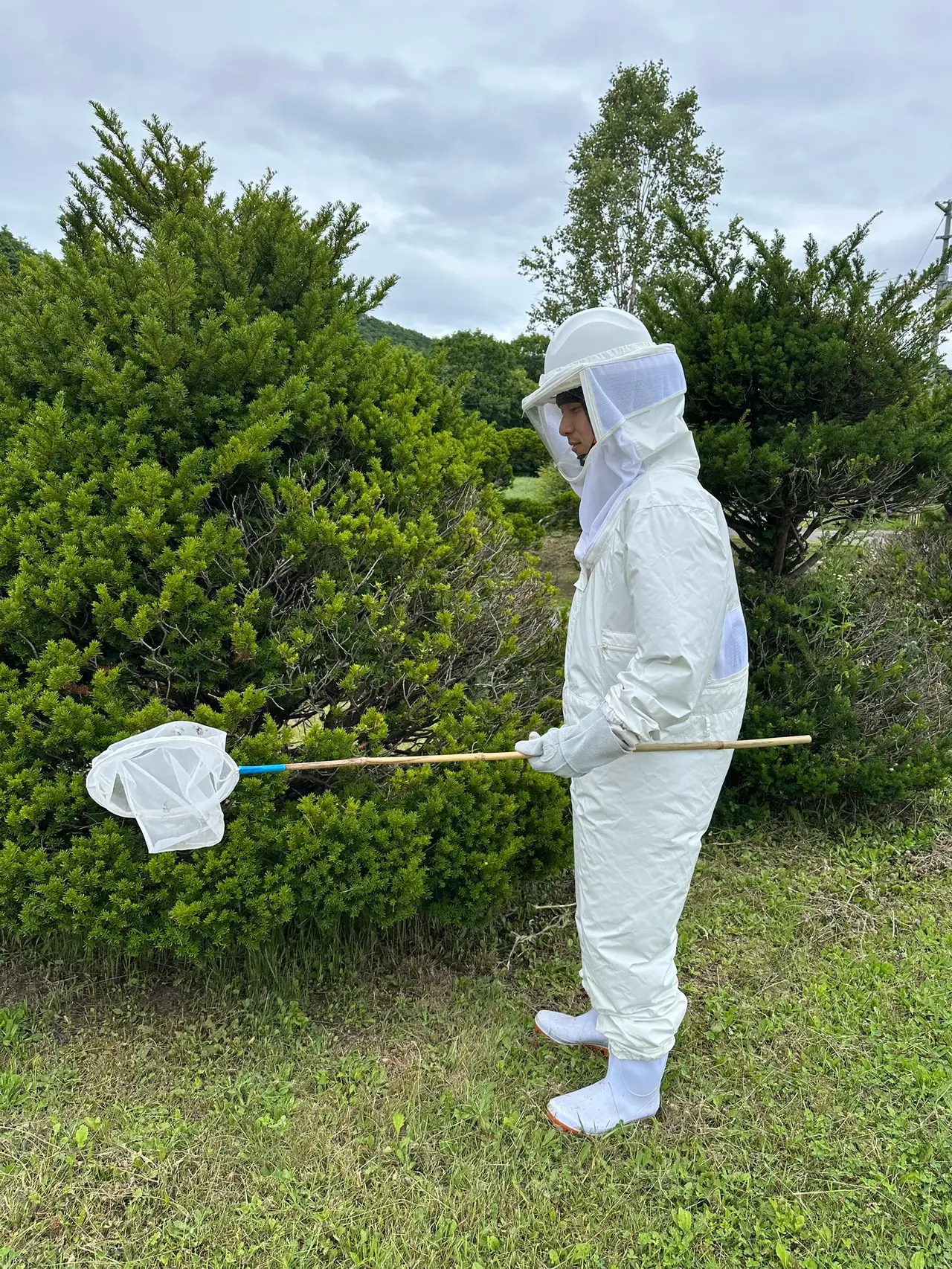
Wasps build where they are sheltered from rain and wind and can come and go easily. Around a house, that usually means the places below. We go to all of them.
- Eaves and balconies
- The classic spot for paper wasps. Also above washing poles, behind gutters and inside shutter boxes.
- Sheds and garages
- Ceilings and the backs of shelves, where people rarely go. Often noticed only when the door is opened.
- Attics, wall cavities and vents
- Favoured by the yellow hornet. From outside you see only the entrance while the nest grows inside.
- Garden trees and hedges
- The lesser hornet and paper wasps build among the branches. Many stings happen during pruning or mowing.
- High in a tree
- We climb up and remove it. If you would rather the tree came down too, we can do both.
Types of wasp, and how to tell the nests apart
You don't need to get close to identify it. Send a photo and we will tell you what it is.
| Type | What the nest looks like | Where | Risk | Action |
|---|---|---|---|---|
| Hornets suzumebachi |
In early summer, like an upside-down flask. From midsummer it grows round and large, with a brown marbled shell and a single entrance. | Eaves, attics, wall cavities, sheds, garden trees, underground | HighThey threaten anything near the nest and can sting in numbers. Most dangerous in September and October. | Removal |
| Paper wasps ashinagabachi |
No outer shell: the hexagonal cells are exposed, like an upturned bowl, and rarely bigger than a hand. | Eaves, balconies, shutter boxes, tree branches | MediumFairly placid, but they sting if the nest is disturbed. Stings are very painful and swell. | Removal |
| Honey bees mitsubachi |
Several flat combs hanging in sheets. A swarm on the move may also settle on a tree or wall as a large cluster. | Attics, wall cavities, tree hollows | Low–mediumThey don't sting unless provoked, but the colony overwinters and grows year on year if left. | Removal, or relocation on request |
From your photo to removal
What happens between sending us a photo and us taking the nest away. No middlemen: Rikiya Kaneko, the owner, handles it himself.
-
1
Send a photo on LINE or by email
Send a photo of the nest, where it is (eaves, shed and so on) and a rough size (fist, softball, bigger). We tell you the method and the price from the photo.
-
2
Agree the price and a date
Once you are happy with the price we set a date. In Sobetsu, Toyako and Toyoura we can often come the same day, schedule permitting.
-
3
On the day30 to 60 minutes
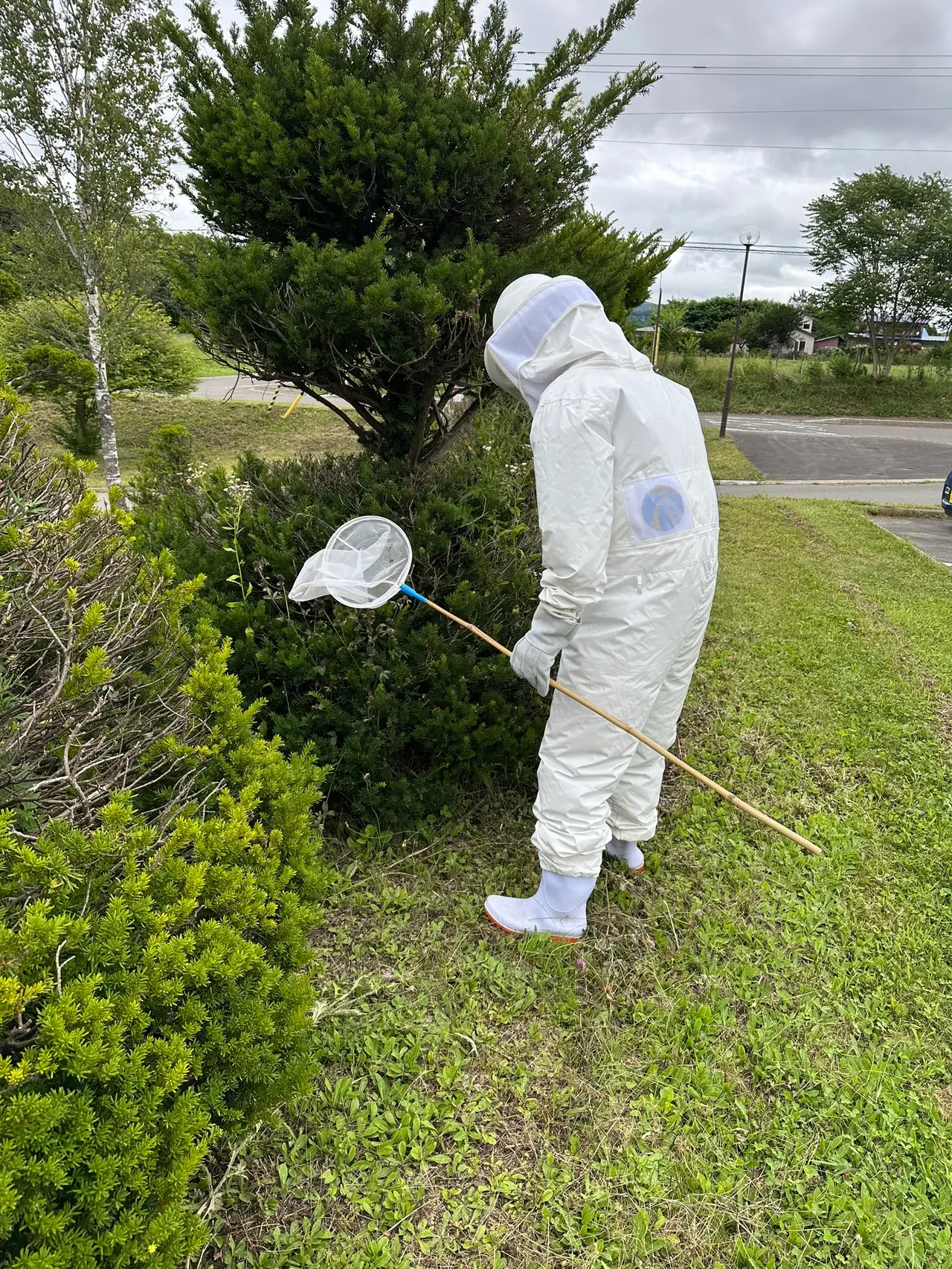
In a protective suit, we treat the wasps inside the nest with professional insecticide and take the nest down. Keep windows closed and stay away while we work.
-
4
Returning wasps and clean-up
Wasps that were out foraging keep coming back to the spot for a while, so we spray it. We take the nest away for disposal. Payment is by cash or bank transfer.
AfterwardsKeep away from where the nest was for a while. Returning wasps disappear over the following days. If anything worries you, message us on LINE.
When wasps are active in Hokkaido
Hokkaido's wasps start later than on Japan's main island, from around May. The smaller the nest, the safer it is to remove.
Queen only, nest smallWorkers increasingPeak, most dangerous
- May–Jun
- A queen that has overwintered starts a nest on her own. It is still small, and this is the safest time to remove it.
- Jul–Aug
- Workers multiply and the nest grows fast. This is when nests start being noticed under eaves and in sheds.
- Sep–Oct
- Nests are at their largest and hornets at their most aggressive. Most stings happen now.
- Nov on
- With the cold, everything but the queens dies and the nest empties. The same nest is not reused, but a good spot attracts a new queen next year. Honey bees overwinter inside the hive.
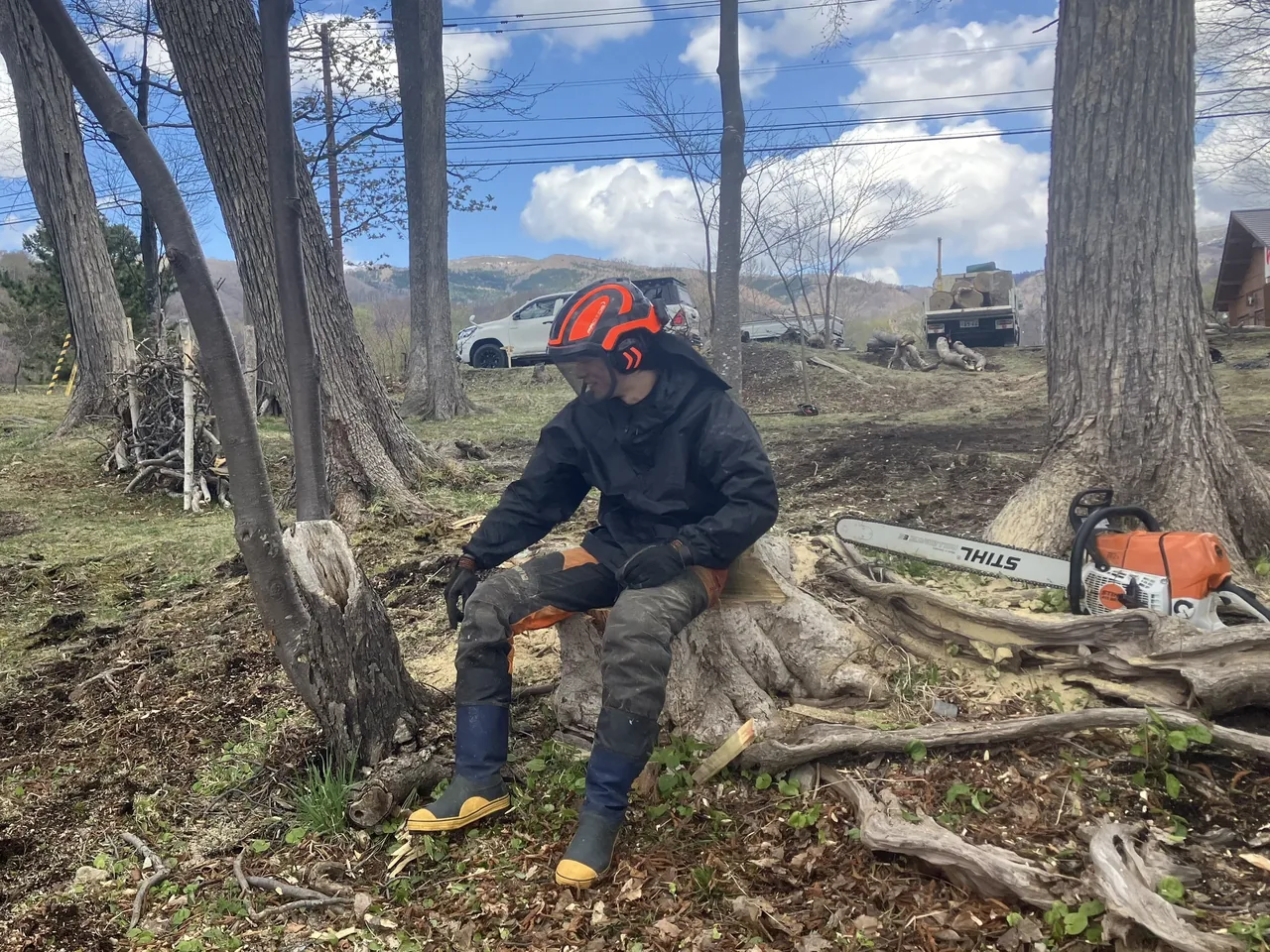
From your first message to the job itself, you deal with Rikiya Kaneko
An owner-operated business in Sobetsu, Hokkaido. No middlemen, and liability insurance in case of property damage during the work. Nests high in a tree can be removed directly using our tree-climbing skills.
Where we remove nests
From our base in Sobetsu we cover Iburi, Shiribeshi (Niseko), Sapporo, Hidaka and southern Hokkaido. Listed from nearest to farthest.
Sobetsu, Toyako (Lake Toya), Toyoura, Date, Muroran, Noboribetsu, Shiraoi, Tomakomai, Chitose, Eniwa, Kitahiroshima, Sapporo, Otaru, Kutchan (Niseko, Hirafu), Niseko Town, Rankoshi, Hakodate, Hokuto, Nanae, Yakumo and more
- Sobetsu, Toyako, Toyoura
- Close to our base in Nakatoya, so travel costs stay low. Same-day removal is possible, schedule permitting.
- Date, Muroran, Noboribetsu
- Thirty minutes to an hour by car from our base. Eaves, sheds, attics and garden trees.
- Kutchan (Niseko, Hirafu, Hanazono), Niseko Town, Rankoshi
- About an hour from our base. Nests at chalets, lodges and holiday homes; property managers are welcome to arrange it on the owner's behalf.
- Tomakomai, Shiraoi, Chitose, Eniwa, Kitahiroshima
- Eastern Iburi out to the Sapporo suburbs. The travel fee depends on the distance and is included in your quote up front.
- Sapporo, Otaru
- We cover Sapporo and the Otaru area too. Send a photo on LINE and we quote including the travel fee.
- Hakodate, Hokuto, Nanae, Yakumo (southern Hokkaido)
- A travel fee may apply in the south. Happy to combine the visit with tree work.
Nest removal: frequently asked questions
How much does nest removal cost?
From ¥12,000 per nest, including spraying against returning wasps. Typical market rates are ¥20,000–50,000 for hornets and ¥10,000–30,000 for paper wasps, so we are on the affordable side. The price can vary with the size and location of the nest.
Which types of wasp do you deal with?
Mainly hornets (suzumebachi), paper wasps (ashinagabachi) and honey bees, in sheds, attics and other places around the home.
Do you treat the returning wasps?
Yes. After removing the nest we spray the spot against returning wasps. It is included in the basic price (from ¥12,000).
Can't I remove it myself?
Off-the-shelf insecticide often just agitates the wasps and gets you attacked, and a sting can lead to anaphylactic shock, which can be life-threatening. If you find a nest, move away quietly and contact us.
Can you come the same day in an emergency?
Depending on the situation and our schedule, same-day removal is possible. Send us a photo and the location on LINE first.
Which areas do you cover?
Iburi, Shiribeshi (including Niseko), Sapporo, Hidaka and southern Hokkaido: Sapporo, Tomakomai, Muroran, Noboribetsu, Date, Chitose, Eniwa, Kitahiroshima, Otaru, Kutchan, Niseko Town, Hakodate, Hokuto and more.
What happens if I leave the nest alone?
From summer into autumn the nest grows quickly and the wasps become more numerous and more aggressive. Hornets are most dangerous in autumn. A small nest is safer, quicker and cheaper to remove, so get in touch early.
Can I remove a small paper-wasp nest myself?
Even with a small early nest, people are attacked every year after agitating the wasps with spray. Nests at height, in attics or belonging to hornets are especially dangerous. If in any doubt, don't risk it: send us a photo on LINE.
Will the town or city office remove the nest?
In Sapporo and most municipalities the office does not remove nests; the owner or manager of the property has to hire a contractor. Some towns, such as Toyoura, arrange removal through a contractor, and some subsidise part of the cost. Check with your local office first, and if you are not covered or it is urgent, contact us.
I found a nest in September or October. Should it still be removed?
Yes. In Hokkaido, September and October are when hornet nests are largest and the workers most numerous and aggressive. In winter everything but the queens dies and the nest is not reused, but the months until then see the most stings, so we recommend removing autumn nests promptly.
Found a nest?
Message us now
Send a photo and the location, and we will tell you the method and the price.
Email: bassai.no.kaneko@gmail.com
English is fine. We reply in plain English using translation tools.
- Quote from a photo: free
- Areas: Iburi, Shiribeshi (Niseko), Sapporo, Hidaka, southern Hokkaido
- Liability insured
- Private customers and companies welcome
Tree removal and pruning too →
A nest high in a tree can be dealt with together with felling, limb removal or crown reduction. For anything tree-related, from felling to hauling the timber away, one call does it.